Showing posts with label blog. Show all posts

Wednesday, March 16, 2022

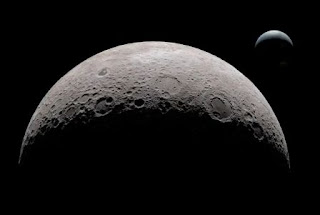
The Dark Side of the Moon


It's been a little over a year since I wrote my last blog post. Since then, the well has dried up. Is this connected to my slipping out of the workforce and into the dark side of retirement? 

To truly answer that question, I suppose I should first ask myself why I am writing a blog at all. In Where Ketchup Will Travel, my first blog post written ten years ago, I described my original motivation as follows:

"For all of you Canadians still out there in the mother country, and you Israelis who are still wondering how all of these immigrants made it in here, I offer you a slightly different look at identity mislaid, sometimes lost, and occasionally gained - here, and in further entries to come."

Most people who knew me were surprised at how someone as socially autistic as myself could open himself up in that way. What they didn't realize was that I had found the perfect medium for doing so.

So, eighty-eight blog posts and ten years later, I ask myself where do I go from here. The emphasis, until now, has been on sharing. By sharing, we shed light on ideas and they become real. But these two last years, a worldwide epidemic has changed the world greatly, forcing us to adapt. And now we have seen how a despot can hold the world captive, turning millions of people into refugees, threatening world order, and perhaps leading to World War Three.

That's the world. And we also have our own personal trials and tribulations where we can exchange notes,

Until now, we have been travelling under the light of the moon. Now is the time to also visit the dark side. You are welcome to join me on the journey.


Thursday, April 25, 2013

And now the book: Why I May Still Be Canadian

A few months ago, I was approached by a publisher to turn my blog - Why I May Still Be Canadian - into a book (paperback).
"Turn a blog into a book?" I asked myself. "Isn't that going in the opposite direction?"
For blogs seem to be almost an antithesis to the printed word. One rests in cyberspace, expanding in elastic time and space - while the other is encased in a limited number of physical pages between two covers.
I may not have seriously considered this request at all, hadn't it been for a remark made by a good friend a short time earlier:
"Your blog would make a good book," he said.
"A book... yes. But what's the point?" I asked myself.

The point, according to the publisher - bloggingbooks, is quite clear:

Blogs deserve being published!
Millions of people share their point of view with the world in real time – This is how blogs have
become part of our everyday lives. Blogs focus on the present and thereby provide continuous
commentary on daily happenings. Events and content, that are presented in a chronological
order on the internet, get a new dimension through books. Books create systematic snapshots
through collecting, compiling, categorizing and commenting.

Are you convinced?

I still wasn't, although they had definitely captured my interest. I think that what may have convinced me in the end was the revelation that a blog is like sand sifting through our fingers. We see it as it passes through, but then it is swallowed up in the collecting mound of sand below. Although one may jump back in time and sporadically read earlier postings, a blog is more like a newspaper than a book. It is archived like many newspapers are, but only a small percentage of people work their way back.

I know that I am subjective, but in transforming the blog structure into book form (a huge task in itself), I really enjoyed reading the postings from old to new. A blog can make a good book, strangely enough.

So Why I May Still Be Canadian  is my second book - the one most people can understand. And this blog posting may be seen as a watershed separating the blog, which is the book, from the blog which still bravely carries onward into the virtual darkness.

If you do purchase my book, drop me a line and share your thoughts. Always good to know that you are not alone.

Friday, October 5, 2012

Canadian Passport Blues Revisited

Canada has recently initiated the “Simplified Renewal Application Process” for a new Canadian passport. Yes, really. Does this mean that we are no longer left with the dreadful anticipation of wading through a complex bureaucratic nightmare at the Canadian consulate in Tel Aviv - a nightmare that I described in graphic detail in my blog post from May 2011 - “The Canadian Passport Blues”?

Well, I decided to try it out, and I’m smiling.

But let’s begin at the beginning.

Shortly after my former passport blog came out, the Canadian Consulate in Tel Aviv decided to make things even harder for us humble, hard working Canadian expat folk. They informed us that we could no longer pay in cash, but had to do so through postal money order or certified cheque.

“Do you think this has something to do with your blog?” a faithful blog follower asked me.
“No, I’m sure it is just a coincidence.”

But then, as if seeking a way to rub more salt into the wound,  they offered the “Simplified Renewal Application Process” - a simple way of obtaining a new passport. Gone was the need for a guarantor signature and documents in English to attest to your existence. You needed  now only to supply the contact details of two people (could even be friends or your next door neighbour) who could confirm your existence. As long as your passport was still valid, or hadn’t expired more than a year before submitting your application, all that you needed to do was to fill out the two pages in the form and submit it together with your passport, two photos and the paid fee.

But... and here is where it became painful, this was not offered to us expats living in the Middle East.

“Are you really sure they haven’t read your blog?”
I simply shrugged. I was no longer sure of anything. Luckily most Canadian expats living in Israel did not blame this on me. Or so I believed.

And I had my own personal dilemma. The expiration date of my Canadian passport was creeping up on me and I had to weigh my options. Did I really want to go through the whole process again? What would happen if I didn’t have a valid Canadian passport? And, for the first time, my indecision led me to stand by and watch as my Canadian passport expired in March 2012.

“They’re watching you, you know.”
“Who?” I asked.
“Those embassy people. They are waiting for you to take out a new passport. You are serving as a bad example. More people may be encouraged to do the same.”
“You’re crazy,” I said. Although I had heard from other Canadian expats who told me that their passport had expired and they had not yet set out for Raanana to get their passport photos taken.
“Do you know,” one expat told me, who had actually braved the long trip again from the Negev to Raanana to get her photo taken, “that they rejected my application because the guarantor’s signature was not dated later than the date of my own signature on the form? That never happened before. What is happening?”


“The question now is who will blink first,” my faithful follower said.
“What?” I asked, the words breaking into my reverie. “What are you talking about?”
“I know what I know.”

So March slipped into April, and April into May, and then June, July, August... It was a standoff. It appeared that no one was going to budge. And then I saw it, in black and white on the Canadian Embassy site:
“As of September 3, 2012, Canadians living in the Middle East may apply for a new Canadian passport through the simplified renewal application process.”

Was this a peace offering? Or a simple chain of events? I could feel them watching me, wondering if I would be seduced into accepting their offer. And time was on their side, for in order to take advantage of their offer, I had to do so before my passport passed the one year expiration date. And  then I found a way to rationalize it all. I would be your test case, and report back to this blog. I really did not expect to get a new passport so easily. I thought that I would enter into the interview with the consulate official and when I presented the filled out form, I would be told something like: “What simplified renewal application process?” or “You are not personally eligible - didn’t you read the fine print?”

So, armed only with my two photos, expired passport, filled out form, and paid postal money order, I marched into the consulate offices. Sitting across from the official, separated by a wall of glass, I passed everything through the compartment to the official. I didn’t even have time to nervously fidget. Within two minutes, she had quickly scanned everything and asked: “Do you want us to mail the passport to you or will you come and get it?” And that was that.

“Is that a hint of praise I hear in your voice?” my loyal blog follower asked.
“I believe that credit should be given where credit is due.
“But you still had to drive all the way to Raanana to get your passport photo taken.”
“Yes.”
“And that is a two and a half hour trip.”
“Actually, now you can do it in two hours, with the new extension to the highway.”
“Still a long way to go.”
“Yes. Zion, the owner of Photo Zion in Raanana,  told me that there are only three computers in Israel with the system he has for generating the passport photo.”
“Where are the other two?”
“I don’t know. It appears to be a well kept secret.”
“How did you find out about Zion?”
“My lips are sealed.”
“I see. Well, all said, would you suggest to expats, whose passports have expired, to rush out and get a new passport through this new process?”
“Well, I suppose so. Unless they want to wait for the new e-passport format, which will be valid for ten years instead of five.”
“When is that coming out?”
“At first there were rumours that it would come out in 2012. But the latest word on the street and on the Canadian Embassy website is that it will be in Spring, 2013.”
“Did you ask at the consulate?”
“Yes. The woman official simply shrugged and said that she had no idea. But these things do take time. Don’t forget, we are Canadians."

Friday, May 4, 2012

You're so vain, you probably think this blog is about you

People annoy me. What can I say. I don’t even remember when it started. I have a vague memory of the doctor slapping me when I came out of my mother’s womb...

Not all people annoy me. Or at least, not all of the people all of the time.

“You can be very annoying,” you say.
“Yes,” I answer. “What is your point, exactly?

People, by themselves, are not always annoying enough to reach my radar. It usually takes an extension of themselves: their pet dog or brood of children - to really get under my skin. You see, most people believe that they are god’s gift to mankind.  And, just in case no one has gotten the point, they send out their dogs and children to get into the face of anybody who might otherwise ignore them. You’ve been there: kids running rampant through the aisles in the supermarket, screaming at the top of their lungs when something is refused - dogs barking in the middle of the night while their owners sleep peacefully and leave the rest of us to toss and turn in despair.

Now, I like animals. Actually like them much more than people. There is probably a name for that ( there is a name for everything these days). Maybe it is because both animals and I don’t talk much. Much more into observing. So, the other night, at 1:30 in the morning, I went out and picked up some stones on the way  to confront the dog who was barking behind my house. Getting there, I found a dog tied up outside of a house. He saw me and wagged his tail with a huge dog smile, glad to welcome a human presence so late at night/early morning. What could I do, then? Throw a stone at him? So I left him to it and went back to bed, cursing the moron who should have never been allowed to have a dog, much like many parents who should have never been allowed to have children.

If you find this not to be politically correct, so far,  I can only say that it is going to get worse. But in order to partially placate your delicate sense of fair play, I will no longer brand people as “annoying”. Rather, let’s just say that they are “socially challenged”.

Actually, I am just as socially challenged as anyone else, but I keep it to myself. Which most people consider annoying. You see, I can sit at a party, or dinner, or any other social event a whole night and say nothing. Most people will probably pass this off as my not being intelligent enough to take part in their riveting conversation. Other people attribute my silence to my not finding them, or their conversation, interesting. And this really pisses them off. You are supposed to mingle in social situations. And if you don’t have anything interesting to say, making a fool out of yourself is just as socially acceptable.

“What are you, socially autistic?” you ask.
“I have never thought about it in that way,” I answer. “But now that you mention it, the shoe fits.”

The irony of it all is that I am not a people person (if you haven’t already guessed), yet I have spent almost all of my adult life living in small communities (we are talking about less than a thousand souls - not counting the dogs). This brings me into more contact with people than I would have, say, in the city. The first community (14 years of my life) was a kibbutz. The second community (20+ years and counting) is a small community on the edge of the Zin Wadi. When we first came here, the community was much smaller, almost everyone knew each other, and there was a feeling of common purpose in living here. This has changed over the years. What was once a cohesive community has turned into social anarchy. We could blame this on how quickly the community has expanded, as more and more people build houses here. Or on the fact that many people build houses only to rent them out at obscene prices in order to make a windfall. But the main factor may be that many people have recognized this is a place where they, their children and their dogs can live as free spirits. What others might call - “running wild”. But hey, let’s not quibble over semantics.

I mean, how many places do you know where you can let your dog run loose terrorizing children and bark all night terrorizing aspiring sleepers, without any fear of being called into account. Yes, we do have a “residents committee” which has promised to work towards “enriching” our communal experience. And yes, like most good committees, they keep sending us newsletters telling us about how they are going to round up dogs on the loose and call their owners into account. For about ten years, we have seen these proclamations repeatedly. Haven’t seen them in a while though, probably because a dog chews them up, just as two dogs chewed up our Friday newspaper which was dropped off early morning by the paper boy. Did the dog owner offer to buy us a new newspaper? No, he simply cleaned the mess of torn fragments off of his OWN lawn.

“Bitter. You think I sound bitter? No, not at all. That is one of the advantages of being a socially autistic and cynical pessimist. You don’t hold high expectations.”


“The name of the small community where I am living now? I think I will keep this to myself. Otherwise, you’re so vain, you’ll probably think this blog is about you.

Tuesday, November 29, 2011

Discussions with a Muse


“She never married, you know.”
The room was quiet, darker than usual, the only light coming from the glow of the screen. I stopped writing and squinted into the darkness.
“Who?” I asked.
“S...  You remember S. Your first love?”
I remembered. Some things you can’t forget.
“Are we using initials now?”
“You never know who’s listening,” she answered.
“And I thought I was paranoid.”
I could feel her smiling, even though I couldn’t see her.
“How do you know she never got married?”
“I have my ways.” She paused... one of those dramatic little pauses that she was so fond of. “No children, either.”
“And you are telling me this because...” I looked back into the screen, trying to remember what it was I was writing.
“I thought you should know. You never know how far your influence may reach.”
“My influence!” I stared incredulously into the darkness, but it was lost on her. “What do I have to do with her not being married? These things happen.”
“Whatever.”
I found her tone a little suspicious.
“Can I go back to my writing, now?”
“Another book?”
“Yes.”
I heard her sigh. And then silence. I reached for the mouse, hoping she had left.
“M never got married either.”
I slumped back into my chair and pushed the mouse away.
“You are not going to let it be, are you.”
“Should I?”
I sighed. The room was stuffy, despite the darkness. I needed to open a window. I couldn’t remember if there was one.
“No children either.”
“Coincidence,” I countered.
“So you say.”
“Look, I have to get this done,” I said, leaning forward, the chair squeaking.
“Before you lose your inspiration?” She had me there. “Do you remember the day you made A cry? Just before she left to go live... where was it?”
“The other side of the world.” I gave up and lowered the lid of the laptop until it snapped shut. Now the room was totally enveloped in darkness. “No, don’t tell me. She never got married either.”
“You’re getting it now.” Even I, with my well-developed sense of denial, could not but feel that this was the beginning of a pattern. “She was a sweet girl,” she said. “She must have been the sweetest of your girlfriends.”
“How would you know? You weren’t there.”
“I’ve been watching the reruns.”
I shook my head and looked down at the computer, which had given in to her ramblings. Yes, she had been a sweet girl, and yes, it had been criminal of me to even think I could be a proper boyfriend at the time. Or maybe I didn’t think, but simply let things sweep me wherever they would go. No, I couldn’t let her trick me into believing that my influence could stretch that far. I raised the lid and tried to hide behind it, waiting as the computer whirred slowly back to life. It was reassuring to hear something other than our own voices.
“No one is ever going to read this,” I said, as the letters began dancing across the screen.
“Hey, that’s my line.”
“What?”
“In the book. That’s my line in the book.” she protested.
“What does the book have to do with now?”
“The book has everything to do with now. You wouldn’t be here if it weren’t for the book,” she said.
“I think you have things mixed up.”
“Do I?”
And with that, she was gone, as suddenly as she had appeared.

I wonder if confusion breeds good writing. Was that the reason why it took me so long to write a blog and a book? There had not been enough confusion in my life?

I have been trying to make some sense out of life, ever since I read Freud’s Interpretation of Dreams at the tender age of 14. I practiced on my friends, interpreting their dreams, which added to their confusion, but alleviated mine. I discovered that by remaining cold and analytical, I could somehow overcome the bouts of depression which continually swept over me at this age. I decided to adopt the strict Stoic philosophy of controlling one’s emotions. I didn’t realize, at the time, that in order to eradicate the destructive emotions, the positive ones had to go as well. And then one day... A cried...  yearning for the colours that she sensed were in me - where all she got were the multitude of greys.

How can we know how much we influence others? So much else is involved. A hundred things could have convinced S and M and A not to get married, none of them connected to me. True, A told me that last evening, tears streaming down her cheeks, that she should have chosen my best friend instead. One might say that this error in judgement may have prevented her from trusting her instinct in any future, possibly long term relationship. But we were so young then. So many years have passed by since.

“Why should I feel guilty?” I said out loud, needing to be heard. “It’s not as if I couldn't commit myself. I've been married for over 30 years!”
“And you only had to change country, language, religion and culture first.”
“I thought you had left,” I said.
“I forgot the punch line.”
The room looked the same when she was there, and when she wasn't. I wondered how that could be.“Anyway," it was my turn to protest, "you shouldn’t belittle this accomplishment. Do you know that I was voted the person most unlikely ever to get married or have children in my graduating class.”
“Why would you ever want to have children in your graduating class?”
“I...” I sighed and looked around for my glass of whiskey. If it was there, it was buried somewhere underneath black shades of nothing.
“I suppose you want a medal now for staying married,” she said. “Does your wife know?”
“Know what? That we’re still married?”
“No. That there are a slew of former unmarried girlfriends standing out there, waiting in line.”
“Waiting for what?”
“You figure it out. It’s time for me to go.”

Thursday, October 13, 2011

The Nothingness of Being

Ronald Green, in his book Nothing Matters, makes a distinction between nothing and nothingness. Nothing, he claims, is the absence of everything, whereas nothingness is the absence of something. An important distinction. But how do we distinguish, then, between something and nothingness?

 How much room is there in the human consciousness? For everything added, must something else be erased? How much love are we capable of giving? Can we have multiple relationships without one coming at the expense of another? Can we spread our love evenly between our children, without one receiving more, and the other less? When we learn things, must we forget others? Is consciousness the something and the sub-consciousness the nothingness? Whereas nothing appears to be absolute, nothingness is not. We appear able to slip in and out of nothingness. But what comes first - something or nothingness, the chicken or the egg? Can we only conceive of nothingness after we have conceived of something and recognized its absence?

As an example of slipping in and out of nothingness, I’ll take you back to an earlier blog entry - Why Guinness always tastes better in Tel Aviv. There I told you about how Ronald and I would reach great moments of enlightenment over pints of Guinness at Molly Blooms only to have these amazing revelations quickly evaporate into nothingness on our separate ways home. At the time, I thought they were gone for good, but I was mistaken. They resurfaced somehow in two separate books: Ronald’s Nothing Matters which delves deep into the concept of nothing, offering a clear, comprehensive and in-depth study of non-fiction; and my As I Died Laughing which sets out in a dysfunctional and fragmented exploration into the distinction between something and nothingness, supposedly a work of fiction.

It seems as if we are constantly moving back and forth into nothingness and the something which generated it. In leaving country, language and culture behind, my new Israeli identity has erased many parts of the Canadian identity which preceded it. The longer I have lived here in Israel, the further back into nothingness one would expect the exile of my Canadian self to be. But this hasn’t been the case. Recently I have found parts of my Canadian identity, which I thought were lost, fighting their way back into consciousness. I hear that this is not a phenomenon unique to my own personal expatriate existence. Apparently many people find themselves on a curve in their acclimatization to a new country and culture. They struggle to adapt to their new country, and just when they reach  the pinnacle of feeling almost native to the new language and culture, they enter into a period of recession - their former identity subtly reappearing out of their nothingness. And the main difference is that they no longer feel the need to apologize for, or try to stifle, this something that had apparently never gone away.

Which brings us to the concept of being. What does all this matter if we are going to die? And then everything becomes nothing - earth to earth, ashes to ashes, dust to dust - from nothing we came, and into nothing we return. But can we refer the concept of nothing to the concept of being? If nothing is absolute - the absence of everything - then how could anything be created out of it? If our being was nothing before our conception in birth, how could we have ever come about? And if nothing is the absence of everything, how can we enter into the state of nothing after we die. Something surely cannot become a part of nothing. This is probably unexpectedly comforting to many - linking our being to nothingness rather than nothing - believing that by slipping into nothingness, we can slip back into something again. All religions seem to have built their basic premise on this belief, although they all label it differently. For me, personally, I have no room in my vocabulary for an omnipotent being. I have enough of a problem trying to come to terms with my own being. Rather, at this point, it is simply a matter of logic; albeit human logic.

Understanding being, even without taking into account the state of being before our conception and after our death, has puzzled thinkers throughout the ages. A child cannot differentiate between itself and a separate world at first. It goes through a cognitive development where it suddenly becomes aware of objects separate from itself. And then later, it is also able to differentiate between these objects. Is this something that the child is taught, or acquires through experimentation in this new world? Or is it a part of our cognitive programming? And if so, why does it take time for this programming to be activated? Is our cognitive programming the nothingness through which all somethings are recognized? Does this help us understand which comes first - the chicken or the egg?

If something came from nothingness, then the process could hypothetically be reversed. Under special circumstances, we might find ourselves returning to a womb like state. Let us consider the example of Gilad Shalit, a young Israeli soldier who has been held in captivity for the last five years by the Hamas, and who will apparently be released in a few days. Gilad has had no real human contact in the last five years. He has been confined to a solitary cell where his only reality is the things inside these four walls that he can see, hear, touch and smell. Over time, the construct of this reality must have slowly filled his consciousness, pushing back everything he had known before then into nothingness. And in Gilad’s case, we must ask ourselves if there is a point of no return, where something is pushed so far back into nothingness that it is lost forever. For Gilad has come as close as possible to nothing - the absence of everything - as appears humanly possible. Upon his release, will he capable of recognizing a world he once new? Or will this once again become a learning experience? For Gilad, his being hasn’t changed. But for his family and closest friends, they will search for a being that they recognize,and they may have to come to the realization that he is now a stranger. Must we then divide being into two? Who we know ourselves to be and how others see us? After we die, if we do still exist in nothingness or in something, the recognition of our present being is in our eyes only. Others still recognize our being, even after our death, but they only recognize what they remember of us.

Life is frail. There is no doubt about that. And it is finite - no matter what we do. Yet we never give up on our search for meaning. Maybe we just have to learn that meaning can come out of nothingness, just as much as it can come out of something. Or maybe we need to take one step further and come to the realization that there isn’t any real difference between the two.
Thursday, April 28, 2011

Am I an expat, really?

It took me over 35 years of living in Israel before I took on the name of expat. But can I really claim this title after having lived abroad for so many years?

If it weren't for this blog, I probably wouldn’t have adopted this title even now. In my online search for similar ramblings by Canadians living abroad, I discovered the term expat (expatriate). The dictionary definition of expat is "someone living in a country that is not their own country". But this definition leads to even more questions.

What do we mean by "their own country"? Is this defined simply by citizenship? I have dual citizenship: Canadian and Israeli. Am I now a Canadian expat when living in Israel, but  an Israeli expat when living in Canada? Or maybe it is defined by which citizenship came first. In my case it was Canadian, but my children were born both Israeli and Canadian –as they were born in Israel to a Canadian father. Can they then be called Canadian "expats", even though they have never lived in Canada? And what if we had moved half a year after their birth in Israel to live permanently in Canada - which country would they then call their own?

Confusing, eh?

So, who deserves the term "expat"? And when can you begin to call yourself an expat, and when should you stop? Perhaps this all comes down to "nationality". Can nationality really be imported or exported? Take me, for example. Why should I still be considered Canadian after living abroad for over 35 years? It appears that this is exactly the type of question that Canadian legislators have recently begun to ponder. In 2009, they passed new legislation by which individuals can now become Canadian citizens by descent only if one of their parents was either a native-born citizen of Canada or a foreign-born but naturalized citizen of Canada. This new law limits citizenship by descent to one generation born outside Canada, whereas before there was no such limit. And maybe they will soon go further than this. By law, you can become a naturalized Canadian citizen after living a certain number of years in Canada. Why then shouldn't there be a law where you become a denaturalized Canadian citizen after living a certain number of years abroad? I mean – fair is fair.

Personally, I am quite happy that my children are automatically recognized as Canadian citizens, because of me. I see this as one of my better gifts to them, even though they may never end up living in Canada, and their experience of Canadian culture may only be limited to their father's nostalgic ramblings and their short visits to the mother country. One might then ask – "Do they have a Canadian identity?"

Does identity come with citizenship? And do we lose identity when we lose citizenship?

In my expatriate searches, one of the most refreshing sites that I have come across, so far, is "I was an expat wife" - http://iwasanexpatwife.com/ . Upon moving back with her family to Canada, Maria defines herself as a Canadian repatriate. This opens up a whole new Pandora's box of possibilities.

I don't know what I am. Call me what you will. In recent deliberations over a few pints of Guinness with fellow expats (not only Canadian expats), we came to the conclusion that the longer you are away, the lesser chance you have of ever finding your way back. Somewhere along the line, there is a cutoff point. The problem is: none of us ever read the fine print.